

Welcome to the fast-paced world of digital marketing. Here, a landing page is key for turning online visitors into leads. It’s not just any web page, but a special one. It has one clear goal and is made just for that purpose. This page is built apart from your website, just for a marketing campaign.
Landing pages are essential in digital marketing. They grab your visitors’ attention. Then, they guide them smoothly towards action. This could be signing up for news, downloading a book, or buying something. Knowing what a landing page is will help your campaigns a lot.
A great landing page isn’t just part of your marketing tools. It’s a key player. With the right design, it turns casual browsers into buyers and simple clicks into loyal customers. Want to boost your digital marketing strategies? Let’s explore how landing pages can help you achieve that.
Defining the Basics: The Purpose of Landing Pages
Today’s digital world shows us how crucial landing pages are for marketing. These pages are not just about attracting people. They are created to turn visitors into leads. This is done through a clear call to action (CTA), generating leads, and improving campaign conversion rates. Let’s dive into how landing pages achieve these vital goals.
Directing Your Audience with Clear Intentions
Landing pages guide your digital marketing efforts. They help steer your audience to take actions that match your business goals. Whether introducing a new product or seeking customer feedback, the CTA on your landing page encourages people to take specific steps. Steps like subscribing to a newsletter or buying your latest product. The success in generating leads greatly depends on how clear and visible the CTA is.
Measuring the Effectiveness of Your Campaigns
Using landing pages lets you measure how successful your campaigns are. By looking at conversion rates, you understand what works and what doesn’t. This approach guides you in enhancing your marketing strategies. It ensures your business, and your customers gain valuable experiences.
Creating a Focused Path for User Action
A great landing page is focused. It makes the user’s decision process easier by offering a single path to action. It gently leads a visitor towards making a purchase or filling out a lead form. Every element of the landing page, from design to content, aims to guide users easily towards this goal.
This focus results in higher conversion rates and a smoother user experience. It’s crucial for the success of any digital marketing plan.
| Feature | Impact on Lead Generation | Impact on Conversion Rate |
|---|---|---|
| Optimized Call to Action | Increases visibility and clarity for taking action | Directly correlates with higher engagement |
| Streamlined User Pathway | Enhances user experience by reducing distractions | Leads to higher completion rates of desired actions |
| Targeted Content | Makes the page relevant to the right audience | Improves the likelihood of converting interested visitors |
Landing pages are essential in the digital marketing world. They guide your audience clearly and provide insights through data. They capture the essential elements for market success. Use them wisely, and your campaign’s success will soar.
What Is a Landing Page and How Does It Differ from Other Web Pages?
In the world of digital marketing, it’s vital to know the difference between a homepage vs landing page. This knowledge helps you use targeted marketing to achieve high specific engagement. A homepage is usually the first place visitors land. It offers many ways to explore a site. On the other hand, a landing page has one clear purpose, pushing visitors towards a single goal.
If you’re making a page to push a new product, you’d use a landing page. This type of page cuts out any extra fluff found on regular homepages. It matches well with targeted marketing tactics to lift conversion rates via specific engagement. This focused method is key for success in the busy online world.
| Feature | Homepage | Landing Page |
|---|---|---|
| Primary Purpose | General Overview | Specific Conversion |
| Navigation Options | Multiple links to explore | Minimal, focused on conversion |
| Content Type | Broad, for various user intents | Targeted, for specific user action |
| User Engagement | Encourages exploration | Guides towards a single action |
Using a landing page well can make your marketing much more powerful. It’s all about the choice between a homepage vs landing page. This decision shapes the user’s journey. It leads to stronger specific engagement. And it makes your targeted marketing campaigns work better.
The Anatomy of a High-Converting Landing Page
Landing pages are critical in digital marketing. Their design greatly impacts converting visitors to customers. Let’s look at what makes a page more than just a page, turning it into a tool for engaging users.
The Must-Have Elements: From Headlines to CTAs
Every great landing page starts with persuasive headlines. These headlines must catch the eye and promise something the page delivers on. They’re your chance to hook visitors. A clear Call-to-Action (CTA) is also key, whether it’s for signing up or learning more.
Here are the vital parts:
- Persuasive Headlines: Make headlines that speak to the visitors’ needs.
- Informative Subheadings: These keep readers interested and guide them to the CTA.
- Clear CTAs: Make your buttons stand out and your text encourage action (e.g., ‘Get Your Free Trial’).
- Social Proof: Trust builds with testimonials or numbers of users.
Design Considerations for a User-Friendly Experience
Your landing page design should guide potential customers smoothly. It needs an easy-to-follow layout, quick load times, and should work well on any device. All of these help keep users interested and moving towards a purchase.
Copywriting Tips for Engaging and Persuasive Content
Your landing page’s content should both inform and persuade. Strong copywriting grabs and keeps attention, nudging visitors towards a decision. Use straightforward, lively language and address the reader’s needs directly to motivate them.
Here’s what you might include:
| Component | Objective | Example |
|---|---|---|
| Headline | Catch attention and summarize the offering | “Boost Your Business With Proven Marketing Strategies” |
| Subheading | Give more details and encourage reading | “Join 500+ Companies Achieving Their Marketing Goals” |
| CTA Button | Encourage action from the user | “Start Your Free Trial Now” |
| Testimonials | Build trust with proof from others | “See Why Our Clients Love Us” |
To make your landing page work best, focus on these tips. The page should be attractive and effective in getting users to engage deeply. A good landing page combines compelling content, strategic design, and persuasive CTAs. This mix provides a smooth experience for the user.

Creating a Landing Page that Resonates with Your Target Audience
It’s key to understand your target audience when designing a landing page. By making detailed customer personas, you can match your content with their specific needs and dreams. Emotional triggers are crucial here. They motivate people to take action. Using certain images, words, and stories can really touch your audience. This makes them connect more with your brand.

To make your landing page better, it’s important to do market research and listen to customer feedback. This helps you improve what you have and find new ways to connect. Here is a simple guide for your research:
- Identify the demographic and psychographic characteristics of your potential customers.
- Analyze customer feedback for recurring themes or suggestions.
- Experiment with different emotional triggers in your content to see which elicits the strongest response.
- Refine your messaging continuously to adapt to changing perceptions and preferences.
Here’s a look at how your landing page can do better by matching your audience’s interests. This can really boost engagement.
| Feature | Before Personalization | After Personalization |
|---|---|---|
| Engagement Rate | Low | High |
| Bounce Rate | High | Low |
| Conversion Rate | Low | High |
| Customer Feedback | Negative/Neutral | Positive |
The key to a great landing page is making it reflect and meet your audience’s needs. By making and updating customer personas and responding to emotional triggers, your page becomes a powerful tool. It’s tailored just right for conversion and satisfaction.
Driving Traffic to Your Landing Page: Best Practices
Once your landing page is up, the main goal is drawing visitors in. Using search engine optimization, social media, and pay-per-click ads can boost your visibility. Let’s see how you can use these strategies to get more people to your landing page.
Utilizing SEO Strategies for Organic Reach
SEO is key for making your page more visible in search results. Make sure your page has the right keywords, is mobile-friendly, and loads quickly to improve your search ranking. Also, create good content and get backlinks from well-known sites to help your SEO.
Leveraging Social Media for Broader Exposure
Social media is great for getting the word out and connecting with your audience. Use Facebook, Twitter, and LinkedIn to share your landing page. You can post stories, updates, and even pay for ads. This way, you’ll reach more people and bring them to your landing page.
Effective Paid Advertising Campaigns to Boost Visits
Pay-per-click ads can reach people beyond organic search. Target specific groups and place ads where they’ll see them. Platforms like Google Ads and Bing Ads let you control your budget, who sees your ads, and when. This helps get the best return on what you spend.

When you mix all these strategies, you can really increase traffic to your landing page. Let’s look at how each one helps bring in more visitors.
| Strategy | Description | Benefits |
|---|---|---|
| SEO | Enhances visibility and ranking in search engine results. | Increases organic reach, cost-effective, builds credibility. |
| Social Media Marketing | Utilizes platforms to promote content and engage users. | Broadens exposure, engages directly with audience, boosts brand awareness. |
| PPC Advertising | Employs targeted ads to attract potential customers. | Drives immediate results, highly targetable, measurable impact. |
Each channel has unique strengths. Together, they can really boost your landing page traffic. This opens up more chances for people to convert and your site to succeed.
Testing and Optimizing: The Key to Landing Page Success
Diving into digital marketing means getting to know landing page optimization. It’s more than making a page. It’s about improving it over time for top results. In this section, we cover how to use A/B split testing, web analytics, and conversion rate optimization to make your page work better.
Understanding A/B Testing for Data-Driven Decisions
A/B split testing is key for comparing two versions of a landing page. This approach tests changes in things like headlines and call-to-action buttons. With it, you learn what works best for your audience, making your page more effective.
The Importance of Analytics in Landing Page Strategy
Using web analytics is essential for refining landing pages. They offer insights on how users interact with your page. Tools like Google Analytics track metrics such as bounce rate and conversion rates. This data shows where your page stands and how to improve it.
Common Pitfalls to Avoid in Landing Page Optimization
When optimizing your page, avoiding certain mistakes is crucial. Not optimizing for mobile, ignoring load times, and not refreshing content are issues to watch out for. Recognizing these mistakes helps you keep your landing page on track.

| Feature Tested | Improvement in Conversion Rate | A/B Test Duration |
|---|---|---|
| Headline | 18% | 14 Days |
| Call to Action | 21% | 10 Days |
| Images | 15% | 7 Days |
| Overall Layout | 20% | 21 Days |
Following these strategies and dodging common issues can boost your landing page. Better performance leads to more user interest and more conversions. Keep testing and optimizing. Use data to steer you to digital marketing success.
Real-World Examples: What Successful Landing Pages Look Like
Looking at case studies can really open your eyes when making your landing page. We’re going to check out landing page examples from different areas. You’ll see how smart marketing strategies and good design lead to great results.
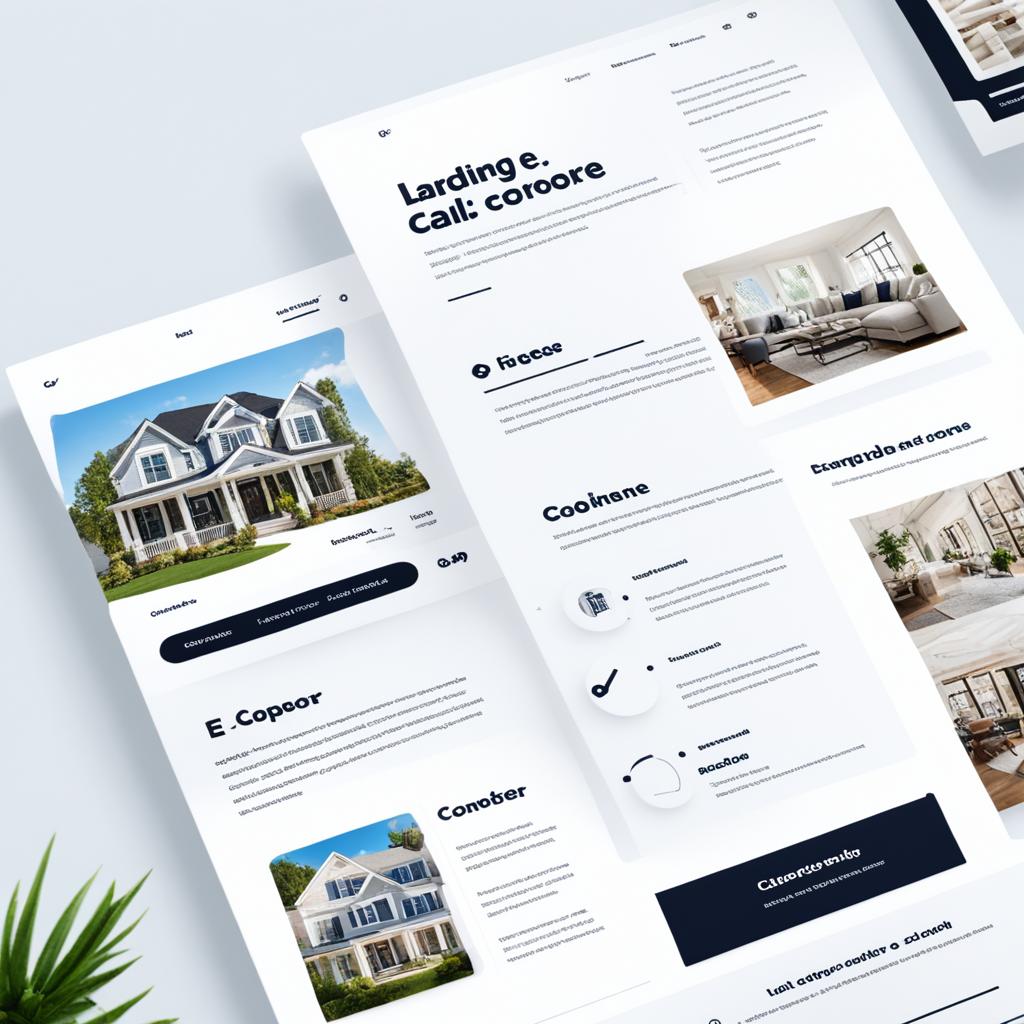
Every study shows important stuff like easy layout, clear messages, and smart calls-to-action. These are key for making landing pages that don’t just look good—they work. They draw people in and turn them into buyers. By looking at these, you’ll learn how to make your own pages both nice to look at and effective.
Remember, a great landing page isn’t just pretty. It also needs to clearly show its value to visitors, making them want to act.
Let’s compare some winning landing pages and see their big wins in their markets:
| Industry | Key Features | Results |
|---|---|---|
| Technology | Minimalist design, strong CTA, video testimonials | 45% increase in customer sign-ups |
| Healthcare | Interactive FAQ, responsive design, real-time scheduling | 30% more appointments booked |
| Retail | High-quality images, user reviews, limited-time offers | 50% growth in sales during campaign |
The case studies show that good landing pages adjust features to fit the industry while keeping to basic marketing rules. This flexible strategy means landing pages in any field can teach us how to boost our marketing strategies.
You should understand how specific tweaks and basic design and marketing approaches blend to make a landing page that speaks to people and gets them to buy. Use what you learn here to make or improve your landing pages, making them more engaging and successful.
How to Use Landing Pages in Your Marketing Funnel
Landing pages are key in your marketing funnels, especially at different stages of the customer journey. They do more than just gather leads. They engage, inform, and make visitors want to act through smart content alignment and strategy.
Aligning Landing Pages with Customer Journey Stages
Landing pages are there for customers at every stage of the funnel. They meet the customers’ current needs or interests. Whether it’s getting to know your brand or deciding to buy, each page guides them closer to making a purchase. This smooth pathway enhances the user experience and boosts effectiveness.
Integrating with Email Campaigns for Lead Nurturing
Landing pages are great for teaching and engaging your email subscribers. By matching the content of your pages with your email messages, you create a clear path. This helps guide subscribers to deciding to buy something.
Retargeting Strategies to Re-engage Visitors
Landing pages are crucial for bringing back visitors who didn’t buy the first time. By using retargeting strategies that appeal to their interests and past actions, you can greatly increase your chances of making a sale.

Think about how each landing page can meet specific needs in your marketing funnel. Here are ways to make your landing pages better at nurturing leads and crucial to your conversion path:
| Funnel Stage | Landing Page Objective | Key Tactics |
|---|---|---|
| Awareness | Gathering Initial Interest | Educational content, engaging visuals, introductory offers. |
| Consideration | Building Desire and Preference | Comparative analysis, detailed product benefits, testimonials. |
| Decision | Encouraging Conversion | Strong CTAs, limited-time offers, guarantees. |
| Loyalty | Retaining Customers | Follow-up surveys, loyalty rewards, upcoming product previews. |
Using landing pages well can change how you connect with people, nurture leads, and make sales. By making content that matches the buyer’s journey, nurturing through email, and using retargeting, your landing pages can make your digital marketing campaigns much more effective.
Conclusion
The role of a landing page in digital marketing is crucial. We’ve explored how to create effective landing pages. Remember, your landing page strategy must be clear and meet your audience’s needs.
To boost your conversion goals or marketing ROI, landing pages are key. They are an important tool in your digital marketing toolkit.
Design and content must work together smoothly. They guide visitors to act. This focus can turn a browser into a loyal customer.
By testing and improving your landing pages, they will get better. They will more closely match what users want and like. Keep refining your strategy to stay ahead in the fast-changing digital world.
Now, use what you’ve learned to make great landing pages. Make pages that reflect your brand and excite your target audience. Landing pages are powerful for your online marketing, bringing more meaningful interactions.
Let these lessons help you grow your digital presence. Use them to take your projects to higher levels of success.
Leave a Reply
You must be logged in to post a comment.